18 February 2009

The unbook movement


As some of you know I have been keenly interested in a movement, started by Jay Cross, called the unbook. I have gotten some questions about how the unbook differs from a traditional book, so I thought I would answer them here.
The driving forces behind the movement are the acceleration of business change and the inability of traditional publishing to keep up. With new technologies such as print-on-demand and online marketplaces, authors can now publish books, in both electronic and print formats, at the push of a button. The unbook, due to these factors, operates in a fundamentally different way than the traditional book.
A traditional book is released in editions. When a work is revised or updated, a new edition is released. These revised or updated editions usually offer small, incremental changes, such as a new preface or introduction, a new chapter, or small changes to the content.
An unbook is more like software:
1. An unbook is never finished, but rather continually updated, based on feedback from users andtheir evolving needs.
2. An unbook is released in versions. As in open source software, version 1.0 of an unbook is a significant milestone, indicating that it is stable and reliable enough for use by the general public. The significance of a new release is indicated by the size of the gap: For example, the difference between 1.1 and 1.1.3 is minor, while the difference between 1.1 and 2.0 is major.
3. An unbook is supported by a community of users who share their experiences and best practices with each other, and help each other troubleshoot problems encountered in their practice areas. An unbook’s community is a very real part of the unbook’s development team.
I have published an unbook, Marks and Meaning, to catalogue my continuing efforts in the field of visual thinking and information design, and to develop a user community focused on that discipline.
An unbook is mindware: software for the mind: And in the case of Marks and Meaning, my hope and intent is to develop not just software, but an operating system which improves on our current thinking models and makes our minds more useful and usable.
In the same way that graphical user interfaces (GUIs) improved the usability of computing devices, I hope, with your help, to develop a graphical operating system for the mind.
The field of information design is developing so rapidly that I believe an unbook is the only way to do this.
I believe that the unbook form has real potential, especially for emerging disciplines like information design, such as user experience design, agile software development, social media, and knowledge management, as well as established disciplines which are undergoing significant change (finance? government?).
To support these efforts, Jay and I have set up a website to support the unbook movement and provide a comprehensive catalogue of available titles. Please take a moment to visit theunbook.com and leave us a note! And if you are working on an unbook or plan to start one, let us know so we can add it to the uncatalogue.

Keep in touch! Sign up to get updates and occasional emails from me.

03 February 2009

Comments

I accidentally deleted some recent comments while trying to delete some spam. Unfortunately Blogger doesn't let you "undo" that particular operation. If you commented recently, and your comment didn't show up, I am very sorry. If you re-post your comments I promise they'll go through this time (unless you're a spammer!:).

Keep in touch! Sign up to get updates and occasional emails from me.

26 January 2009

Why you need to go to VizThink 09


Dave Davison sketches, originally uploaded by dgray_xplane.

VizThink, for those who haven’t heard of it, is a global community of visual thinkers that I helped to launch in 2007. The community was formed in recognition of a broad and emerging trend that offers a new path to innovation in business thinking.

VizThink is very different than other conferences in several ways:

VizThink is about differences: Most conferences try to create a space for like-minded people to gather and learn from each other. VizThink is exactly the opposite. It's a conference about differences. It attempts to cast the widest possible net of people and disciplines that stand to gain from visual thinking.

Why would you want to explore differences? One of the greatest strengths of visual thinking is its ability to connect disparate points of view, to build bridges that cross disciplines and connect ideas that might otherwise never be connected. The one thing that connects the VizThink community is that they are innovators who share an interest in visual thinking; who know that looking outside your own field is necessary if you want to innovate.

VizThink is about innovation: The connective power of visualization is one of the reasons you'll find visual thinking at the core of innovation and discovery.

Is your industry undergoing rapid change? Are you stuck in a business or an industry rut? Do you need truly new ways to approach or think about your business? If so then VizThink is for you.

Do you want to learn how people are using visual thinking today, in a wide variety of fields and disciplines, to navigate change and grow their businesses? If so, then VizThink is for you.
At VizThink you will find computer scientists, developers and engineers. You will find project managers, business executives, researchers and strategists. You will find marketers, salespeople, social media experts, educators, psychologists.

You’ll find a wide range of industries, from non-profits to consumer goods, technology, health care, government and education.

VizThink is about design: Yes, you will find designers at VizThink, and people who care about design. Design with a capital “D.” Design as a path to business advantage. Design for world-changing. Design as a method for growth and transformation.

You’ll find user experience designers, product designers, software designers, information designers, industrial designers, web designers, instructional designers, map designers, form designers, e-learning designers, presentation designers and more.

VizThink is about new voices: In January of 2008, Dan Roam’s presentation at VizThink launched a year-long book tour for his first book, the breakaway hit Back of the Napkin, named #1 business book of the year by both Business Week and Fast Company.

Nancy Duarte also presented at VizThink in January of 2008. In September she also launched her first book, Slide:ology, which Prezentation Zen master Garr Reynolds called “My favorite presentation book of all time.”

Both Nancy and Dan will be back at VizThink 2009, along with a host of other speakers who represent a broad spectrum of innovative thinking, including:

Robert Horn, one of the earliest innovators in the visual thinking field, who founded the company Information Mapping in 1967 and wrote the book Visual Language: Global Communication for the 21st Century.

Colin Ware, Director of the world-reknowned Data Visualization Lab at the University of New Hampshire, who has written groundbreaking books on information visualization and visual reasoning, designed 3D geospatial visualization systems, and written over 100 scientific papers related to visualization and perception,

David Sibbet, Founder of the Grove consultancy, who has helped numerous businesses and non-profits develop vision and strategy through visualization,

Luke Wroblewski, Senior principal and product designer at Yahoo, who leads a team that designs and refines the user experience of online products and services,

Jock MacInlay, Xerox PARC veteran and information visualization expert, Director of Visual Analysis at Tableau software,

Joyce Hostyn, Senior Director of Product Design at Open Text, whose focus is bringing interaction design principles to Enterprise Software,

Tom Wujec of AutoDesk, who works with leading-edge Fortune 500 companies to help them incorporate visualization and collaboration into their innovation initiatives,

Jerry Michalski, social media expert who works with leading organizations around the world to help them build trust and community,

Darin Westrich, who has led global brand design for several P&G hallmark brands, such as Crest, Vick’s and Iams,

And many, many, more, too many to name here.

Last year I found VizThink to be a life-changing experience. I have never in my life felt so much electric energy in one place.

This is a tough economy and I know that it’s not easy to find money for conferences. But think about this: The speakers aren’t being paid to be there; they are all going at their own expense, because they want to be a part of this growing community.

VizThink is only weeks away, and due to current economic conditions, VizThink is not planning another global conference until the economy improves. So if you’re thinking, “I’ll go next year,” then think again. This year you have a once-in-a-lifetime opportunity to be a part of this emerging community and I hope you will take advantage of it.

Who will be the breakaway new voices, and which ideas will drive innovation and transformation in 2009? Join me at VizThink 2009 and we’ll find out together.

Update: VizThink CEO Tom Crawford just gave me a discount code you can use to get $200 off the registration fee: When registering, just use the code FCDG01.

Keep in touch! Sign up to get updates and occasional emails from me.
23 January 2009

Unbooks and more

I'll be speaking at the upcoming O'Reilly Tools of Change for Publishing conference in New York, which runs from February 9-11. I'm speaking on a panel called Building a Better Web-Based Book.

The reason I was asked to join the panel was partly because of my thoughts and experiments with the unbook. So I have three questions for you:
1) Do you have any thoughts on how we can build a better web-based book? Or thoughts about the future of the book as we enter an age that's more and more digital and distributed?
2) Is anyone else out there experimenting with ideas about delivering book content, whether it's a mix of paper and electronic media or something else?
3) Is anyone specifically doing an unbook, or an unbook-related project? I'm asking because I want to start an online list that links to all the known unbooks out there.
And I also have a suggestion: If you're interested in the future of the book, or the future of paper, you might want to join me and a few others in Albany NY the weekend before the conference at Papercamp, where we'll be exploring exactly ideas in a very open forum. Papercamp was started by Matt Jones, who has already run one in the UK. You can read a great writeup about that one here (This one's probably going to be smaller).
So I suppose I have a fourth question: Are you coming to Papercamp NY?
As always, please share your thoughts!

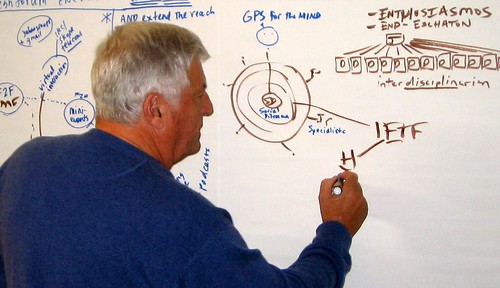
(Image above is a photo of Jerry Michalski demonstrating his note-taking methods)

Keep in touch! Sign up to get updates and occasional emails from me.
Visual Thinking workshop


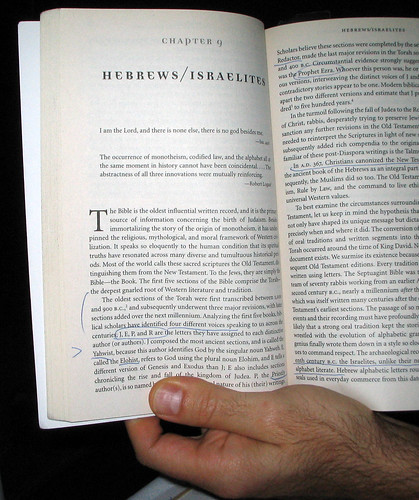
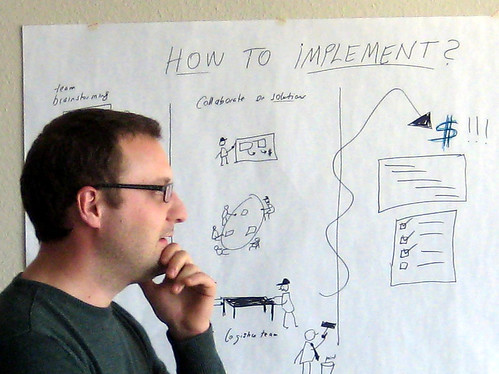
I'll be conducting a pre-conference workshop on visual thinking the day before VizThink 09 in San Jose, CA. The photos above are from previous workshops.

This is the last day-long workshop I'll be doing for awhile, and it will be the last VizThink conference for at least a year. I hope you can make it!

Keep in touch! Sign up to get updates and occasional emails from me.
19 January 2009

Comment spam

Dear readers,

I guess it's a measure of popularity, but comment spam on this blog has gotten a bit out of control in recent months.

For those who don't know the term, comment spam refers to comments that are blatantly promotional and link back to the commenter. They say things like "Visit my pharmaceutical site" and "WOW power-leveller." Comment spam is an unethical way for web-based businesses to raise their rankings in the search engines.

It does not refer to comments that legitimately address the ideas in the blog post, however controversial those may be.

As this blog gets a fair amount of traffic, it seems to have become a target. I prefer not to moderate posts but at this point I am spending too much time every day going through comments and deleting spam. It's like weeding the garden, which was never my favorite chore.

So, reluctantly, I am instituting some weed-control measures. I have set comments on this blog to "moderated." I'm still allowing anonymous comments and I promise to publish any comments that relate to the posts, regardless of whether I agree or disagree. I'll even publish rude comments as long as they are relevant and not obscene. In matters where the decision is difficult, I will apply Robert Scoble's living room test.

I hope that this extra step will not discourage you from commenting on this blog. Your comments and the discussions they generate are the main reason I blog, so I hope they will continue.

Best regards,

Dave

Keep in touch! Sign up to get updates and occasional emails from me.
17 January 2009

Free the facts!


Facts are an important element of any decision-making process. When we as a society make decisions that affect our future, facts, and conversation or argument about what they mean, is a critical part of those decisions.

But what is a fact, and how do we know that something is a fact? Is there a "keeper of the facts?"

This little thread is an exploration of facts: What they are, how they come to be, who has access to them and why. It's especially focused on the facts that make up the sum of our scientific knowledge.

If you enjoy this series you might also enjoy the thread where this conversation and inquiry began.

Read this thread, with all comments, on Flickr.

Read more about open access.

Read an open letter to the U.S. Congress, signed by 26 Nobel Prize winners.

Join the Alliance for Taxpayer Access, a diverse and growing alliance of organizations representing taxpayers, patients, physicians, researchers, and institutions that support open public access to taxpayer-funded research.

Learn more about what you can do to promote open access.

Write your U.S. Representative to demand open access for publicly funded research.

Contact your U.S. Senator.

Vote to make open access to research a priority for the Obama administration.

Keep in touch! Sign up to get updates and occasional emails from me.

12 December 2008

Some basic rules for napkin-sketching


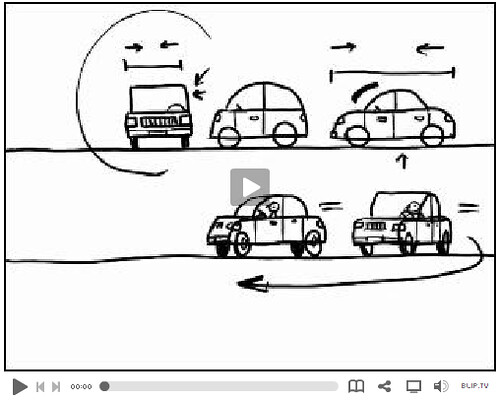
Here is a short (3.5 minutes) video with a few guidelines for making better napkin sketches:

1. Ground line

2. Center(s) of gravity

3. Connect figure to ground

4. Big-to-little

5. Draw through and over

I hope you enjoy it.

Keep in touch! Sign up to get updates and occasional emails from me.

02 December 2008

Visual thinking

This is from a VizThink workshop in Chicago. More about VizThink here.

Keep in touch! Sign up to get updates and occasional emails from me.
25 November 2008

Upcoming


Geneva workshop, originally uploaded by dgray_xplane.

Quick update: Here are some upcoming events where I will be speaking or facilitating in the next couple of months. The photo shows Laurent Haug of LIFT fame in a previous workshop that I conducted in Geneva.

  • SXSW 2009 — Mar 13 - Mar 17, 2009
    I'll be speaking on a panel at the SXSW Interactive Festival in Austin, Texas. The panel is called Shift Happens: Moving from Words to Pictures. More.
  • VizThink 2009 — Feb 22 - Feb 25, 2009
    I'll be speaking and facilitating at the VizThink conference in San Jose, California. More.
  • s-Lab launch8 — Dec 4, 2008
    I'll be facilitating the launch of the Ontario College of Art and Design's Strategic Innovation Lab in Toronto.
  • Keep in touch! Sign up to get updates and occasional emails from me.

    20 November 2008

    How to draw a car


    How to draw a car, originally uploaded by dgray_xplane.

    I just posted a short video drawing lesson on how to draw a car here. I chose a car because it's one of those things that people quite often need to draw and often struggle with.

    I show how you can use simple shapes to make something that conveys the idea pretty clearly. The same principles will apply to other kinds of drawings.

    Let me know if you'd like to see more of these. Enjoy!

    Keep in touch! Sign up to get updates and occasional emails from me.

    16 October 2008

    Good morning Amsterdam!


    I'm in Amsterdam today and this evening I will be having an informal conversation with Yuri Engelhardt and whoever else shows up. If you live here I hope you will join us. Here are the details:

    Thursday 16 October, 20:00-21:30
    Location: Department of Mediastudies, Universiteit van Amsterdam, Turfdraagsterpad 9, room 0.04. Map here.

    Keep in touch! Sign up to get updates and occasional emails from me.

    10 October 2008

    Greetings Berlin!

    I arrived in Berlin yesterday for VizThink Europe 08. I will be touring the city with Tom Crawford and Ryan Coleman of VizThink. If you happen to be in or near Berlin and would like to meet up with us text message me at +1.314.496.6129 and I will text back our location. Hope to see you!

    Keep in touch! Sign up to get updates and occasional emails from me.

    13 September 2008

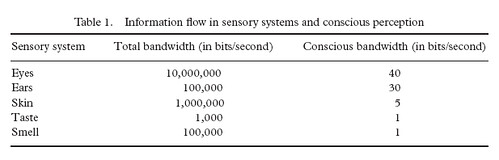
    The eyes have it


    The eyes have it, originally uploaded by dgray_xplane.

    Actual bandwidth of the five senses, compared to the bandwidth we are consciously aware of. From The half-second delay: What follows?, a paper on learning, consciousness and perception.

    Another quote from this interesting paper:
    "Traditional models of affect posit that ... first we decide what we think, and then we decide how we feel about it. However, the evidence ... indicates that the real order of things is likely to be the reverse of this... what we feel about something tells us what we think."

    Keep in touch! Sign up to get updates and occasional emails from me.

    29 August 2008

    Five reasons to go to VizThink in Berlin

    On October 12-14, 2008 I'll be facilitating at VizThink Berlin. For those of you who haven't heard, Vizthink is a global community of visual thinkers who believe the time is right to really engage with visual thinking as a practical way to solve problems and deliver understanding.

    Here are five reasons to go to VizThink Berlin:

    1. Flights are really, really cheap right now. I just got a round-trip ticket for less than $800.

    2. Berlin, by all accounts, is one of the most exciting cities in Europe. The art scene there is world-renowned, with 450 art galleries, with approximately one new gallery opening every week.

    3. VizThink will be one of the biggest collections of visual thinkers ever assembled in one place. If you are one of those people who feels a gravitational pull when you're near a whiteboard, you'll find an assembly of like-minded people such as you've never seen before.

    4. Yuri Engelhardt will be there. Yuri is at the forefront of visual thinking research, and he's compiled the most thorough exploration and synthesis of visual grammatical forms I've ever seen. Plus you get two-for one: Christian Behrens is one of Yuri's students and a formidable figure in his own right, and he'll be there too. His exploration of visual frameworks, information design patterns, is one of the best in existence.

    5. Manuel Lima will be there. Manuel is the genius behind Visual Complexity, a web-based compilation of the most interesting visual information displays on the web. He is also a senior user experience designer at Nokia, looking at the future of how we'll work with information on mobile devices.

    The people mentioned above are based in Europe and don't come to the US very often, so this may be one of your only chances to see them all together in one place.

    These are just a few of the speakers, and just a small number of the compelling reasons to go to Berlin this October. I'll definitely be there and hope you will decide to come too.

    To register, or to get more information about VizThink, visit their website here.

    Keep in touch! Sign up to get updates and occasional emails from me.