06 April 2007

What is an infographic?

This year's Malofiej competition is notable because for the first time ever, an interactive graphic was the only winner for the "best in show" award.

This sparked a lot of conversation about "what is an infographic?" As infographics go online, the line between infography and software begins to blur. Where does infography end and interface design begin?

About a week ago I had an interesting conversation with Juan Velasco, Graphics editor of National Geographic, where we tried to answer some of these questions. It's the beginning of a manifesto -- can you help us make it better?

WHAT IS AN INFOGRAPHIC?

1. It's a visual explanation that helps you more easily understand, find or do something.
2. It's visual, and when necessary, integrates words and pictures in a fluid, dynamic way.
3. It stands alone and is completely self-explanatory.
4. It reveals information that was formerly hidden or submerged.
5. It makes possible faster, more consistent understanding.
6. It's universally understandable.

Please add your comments and thoughts.

Keep in touch! Sign up to get updates and occasional emails from me.

05 April 2007

20 March 2007

Why you can't dial in to free conference call services

If you have a Cingular/AT&T phone, you may have noticed that you have trouble dialing in to free conference call services. That's because Cingular -- your service provider -- is blocking your calls.

Cingular spokesman Mark Siegel says it's not a consumer freedom issue, it's about economics.

I say it's a good time to switch your services, so Cingular can understand the economics of treating their customers this way.

Read more here.

If you want to get out of your Cingular contract, here are some tips:
- How to get out of a cellular service contract
- Get out of your cell phone contract
- Celltrade: A service that helps you change providers
- How to get out of a cell phone contract

Keep in touch! Sign up to get updates and occasional emails from me.

17 March 2007

What’s next in visual communication?

This article was originally published in Infonomia, a Spanish magazine. Read it in Spanish here.

Two million years ago, the first distinct and recognizably human cultures emerged. These early humans – known as Homo Erectus, or upright man – made and used complex tools, formed societies, migrated over long distances, used fire, and cooked food – and they did all that without words.

These early humans had 80% of the brain capacity of modern humans, and yet they were biologically incapable of speech. They communicated with each other visually, through gestures, observation and mimicry.

It wasn’t until much later – 25,000 years ago – that the first evidence of advanced drawing and painting skills appears, in cave paintings, such as the beautiful and famous examples at Altamira in northern Spain.

Then, 6,000 years ago, writing appears. Paper was invented by an administrator (anyone surprised by that?) about 4,000 years later.

The combination of writing and paper made it possible to share complex information over long distances. For example, explorers could make and share maps, sketches and detailed records of their discoveries.

In 1440 the publishing industry was born when Johannes Gutenberg invented the printing press. For the first time, written works could be mass-produced. Books became cheaply available.

With the printing press, words were much easier to reproduce than images: roughly 100 alphanumeric characters can convey nearly any idea, whereas every visual image must be uniquely created. There were other restrictions as well: words must be carefully set in lines and columns. Occasionally images could be inset to illustrate the text but all had to be carefully positioned according to a grid.

The printing press gave birth to a powerful industry. Monarchies crumbled as the voice of the people, through pamphlets and tracts, could now compete with the voices of priests, kings and queens. The industrial age of publishing reached its peak with the massive, global entertainment industry in the late 20th century.

Today, entertainment giants such as Fox, Viacom, Disney and Sony dominate global culture because they control most of what the world sees and hears. This in turn gives them tremendous influence over what the world thinks and feels. But their days are numbered, and they know it. In the 21st century, and communication has entered a digital age. Publishing power, like computing power, gets cheaper and cheaper all the time. Eventually, both computing and publishing power will be as cheap and plentiful as paper is today.

It started in 1984, when Apple introduced the Macintosh computer and the first graphical user interface (GUI). For the first time, ordinary people could interact with a computer visually: with window, icons, folders, trash bins. People who had never considered themselves “computer people” now had access to a powerful tool for creative endeavors, which allowed them to do things they could never have done before.

Individuals could now become publishers. With very little investment they could design their own business cards, brochures, logos, even magazines. It was called desktop publishing, and professional publishers were horrified.

The world will never be the same, they said. Without professional training, people will abuse this power. And they were right. Bad design proliferated. Badly designed logos, badly designed brochures, badly designed newsletters, badly designed magazines, became the norm, when once they had been the exception.

Publishing involves both the creation and delivery of information. The desktop publishing revolution solved the creation problem, but in 1984, to deliver a magazine you still needed to print it and mail it, and to deliver a video you needed to broadcast it. And those things were expensive.

But in 1991, Tim Berners-Lee invented another revolution in visual communication: the web browser. Today, because of the web browser, you can publish your ideas to the world for the price of an internet connection.

The cost of creating and publishing information is plummeting inexorably towards zero.
The publishing industry has counted on people’s laziness, their willingness to be led, and their willingness to be fed information. This is the same mistake that established authorities have made since the beginning of time.

They fail to realize a critical fact: the ability to play with tools drives literacy, and the more literate people are, the more involved they become.

Children play with paper and pencils in order to learn how to draw and spell. And as people played with their computers they began to develop their visual communication skills. And playing with digital communication tools like the internet drives visual literacy.

Today, we are free once more. Paradoxically, now that everything has been reduced to zeros and ones, our only limit is our imagination. What’s interesting is that we continue to constrain ourselves to the grid, even when it is no longer necessary. The conventions of printing, which once liberated ideas by making them mass-producible, have now become a prison.

So what’s next? Watch the kids. In the 1970s we started playing video games, and although we didn’t know it at the time, we were learning how to interact with digital technologies. We were learning the hand-eye coordination skills we would need to operate the computers of the 1980s.
The toys of today are the tools of tomorrow: blogging, podcasting, photosharing, videoblogging – these are all early indicators. People are making their own movies and publishing their ideas to the world. With every passing year the technology gets cheaper and easier to use.

What we are seeing today on the internet is the emergence of a truly global culture, a culture that communicates visually. People around the world are playing with visual thinking toys, and their visual literacy is slowly rising.

We’re in the process of learning how to communicate visually – we’re witnessing the emergence of a global visual language. I am very happy to be a part of it.

Keep in touch! Sign up to get updates and occasional emails from me.

17 January 2007

In London this week

Hi all,

I'll be in London this week on my way to open our new office in Madrid. I'm leaving for Spain Saturday morning (20 January). Please leave a comment if you'd like to hook up this week in London -- maybe we can have a blogger meetup or something. Let's discuss who, where and when in the comments section.

Cheers!

Dave

Keep in touch! Sign up to get updates and occasional emails from me.

12 January 2007

XPLANE Culture Map


XPLANE Culture Map, originally uploaded by dgray_xplane.

Every company has a culture, but it can take time to learn, and the stated culturecan often differ significantly from what people actually experience.

At XPLANE we have created a visual map of our culture, to guide our teams in daily decision making and help them make choices that are consistent with what we stand for and who we want to be.

Click here and roll over the photo for notes that explain the diagram.

Keep in touch! Sign up to get updates and occasional emails from me.

09 January 2007

Job openings at XPLANE

As most of you know by now, XPLANE is in growth mode. I thought I would share a list of currently open positions. If you or someone you know is right for XPLANE please let them know about it.

It's an exciting time for us and I hope you will consider joining us.

Applications/resumes should go to opportunities@xplane.com, but please feel free to copy me as well (dgray at xplane dot com).

Senior Information Designer (Portland, St. Louis)


Qualified candidates will demonstrate skills in visual communication, process mapping, creative direction, people management and business technology.

We will also be looking for strong organizational and interpersonal skills.

Computer skills: Adobe Creative Suite, Microsoft Office Suite, and any capability with Web 2.0 tools a plus.

Education/Experience: College degree in visual communication, information design or journalism is preferred. 5 years of real world experience is required.

Travel: You will typically spend at least 5 days out of town per month. A passport will be necessary.

Salary/Benefits: Salary is commensurate with experience and we offer a complete benefits package.

Send your resume along with 3 samples of your best work to opportunities@xplane.com. No phone calls.

Information Designer (St. Louis)

XPLANE is a global leader in visual communication and we are looking a Junior Information Designer to join our creative team. You will work with top managers from Fortune 500 companies around the world to creatively visualize complex processes and technologies.

Qualified candidates will demonstrate skills in visual communication, information heirarchy, process mapping and typography. We will also be looking for strong organizational and interpersonal skills.

Computer skills: Adobe Creative Suite, Microsoft Office Suite, and any capability with Web 2.0 tools a plus.

Education/Experience: College degree in visual communication, information design or journalism is preferred. 2 years of real world experience is required.

Travel: You will typically spend at least 5 days out of town per month. A passport will be necessary.

Salary/Benefits: Salary is commensurate with experience and we offer a complete benefits package.

Send your resume along with 3 samples of your best work to opportunities@xplane.com. No phone calls.

Production assistant (St. Louis)

Requirements:

· 3 years experience in a graphic design studio, advertising agency or interactive agency or comparable freelance experience required

· Bachelor’s degree in fine arts, illustration, graphic design, interaction design or visual communications is preferred

· Experience in Adobe Creative Suite 2, particularly Illustrator and Photoshop is required, Flash skills are a plus

· Excellent rendering, illustration and graphic design skills

· Strong understanding of design principals including: layout, type and color

· Strong conceptual thinking ability

· Excellent understanding of constraints (limited color palette, bandwidth constraints, etc.)

· Ability to define tasks, organize complex projects and meet deadlines under pressured timeline

· Skills in all aspects of managing the print process including production, pre-press and press checking capabilities

· Excellent leadership and teamwork skills

· Outstanding references

Responsibilities:

· Take instructions from a designer to create complete layouts and final deliverables

· Work with a project team leader to fulfill client needs and adjust artwork based on those needs

· Produce final files that image properly to multiple print and interactive environments

· Maintain style sheets and update as required

Send resume and samples to opportunities@xplane.com.

Production assistant intern (Portland)

Requirements:

· Experience in a graphic design studio, advertising agency or interactive agency or comparable freelance experience required

· Bachelor’s degree in fine arts, illustration, graphic design, interaction design or visual communications is preferred

· Experience in Adobe Creative Suite 2, particularly Illustrator and Photoshop is required, Flash skills are a plus

· Excellent rendering, illustration and graphic design skills

· Strong understanding of design principals including: layout, type and color

· Strong conceptual thinking ability

· Excellent understanding of constraints (limited color palette, bandwidth constraints, etc.)

· Ability to define tasks, organize complex projects and meet deadlines under pressured timeline

· Skills in all aspects of managing the print process including production, pre-press and press checking capabilities

· Excellent leadership and teamwork skills

· Outstanding references

Responsibilities:

· Take instructions from a designer to create complete layouts and final deliverables

· Work with a project team leader to fulfill client needs and adjust artwork based on those needs

· Produce final files that image properly to multiple print and interactive environments

· Maintain style sheets and update as required

Send resume and samples to opportunities@xplane.com

Keep in touch! Sign up to get updates and occasional emails from me.

18 December 2006

XPLANE opens office in Europe!

Here's a happy announcement:

XPLANE is opening a European office. Quietly, last fall, we acquired a Madrid-based information firm called IdeaMaps. I am happy to say that in January I will be going to Madrid to formally launch the venture and train the IdeaMaps team in "the XPLANE way." Going forward, IdeaMaps will be known as XPLANE EU and will be serving XPLANE clients in Europe and neighboring regions.

I'm so excited that I keep hearing Audrey Hepburn and Rex Harrison singing in my ear:

"The rain in Spain falls mainly on XPLANE."

There will be plenty more to come on this subject, I have no doubt. Meanwhile, if you are in Europe please leave a comment on this post and introduce yourself! I'll be looking forward to meeting you in person.

Keep in touch! Sign up to get updates and occasional emails from me.

How to find movies you would probably like

Well it's the holidays and if you're anything like me you're scrambling for last-minute gifts, preferably ones you can buy on Amazon.com.

The Movie Map is not only an excellent example of visual thinking in action, it's also a cool tool that can help you out with gift ideas (if you like to give DVDs).

Just enter any movie that you like, and the map will show you, for people who liked that movie, what other movies they liked. The search above shows movies you might like if you liked "The Matrix."

So if you have a friend and you know what movies they like, you can find other movies that they would probably like. Bingo, gift idea!

Check it out.

Keep in touch! Sign up to get updates and occasional emails from me.

14 December 2006

DIY Visual Thinking School


Visual thinking school, originally uploaded by dgray_xplane.

Visual Thinking School (VTS) is a two-hour time slot that XPLANE sets aside each week, specifically for our teams to improve their visual thinking skills.

You can set up and run your own "DIY" version, either at work or at home. Here's how:

The trick is to remember that visual thinking is a holistic skill that involves training the eye, mind and body. The "XPLANE way" is evolving constantly -- most XPLANERs probably learn and try something new at least once a week.

You don't need to be an expert to run visual thinking workshops. Instead of thinking of yourself as a teacher, think of yourself as a learning director. Learning, as opposed to teaching, can be largely self-directed and is usually about a person trying to figure out a way to achieve a goal.

You don't need to be a teacher as much as a goal-setter. Once you have set learning objectives, you can have your team design learning activities themselves.

You could try rotating ownership of VTS to a different person each week.

Give the "VTS owner" a training goal and let them design the session. They can then make calls to subject-matter experts or do some research to fill in any gaps in their knowledge.

You will be amazed at what results you can get with that approach.

Keep in touch! Sign up to get updates and occasional emails from me.

13 December 2006

Still life with book


Still life with book, originally uploaded by dgray_xplane.

Just listed a couple of paintings for sale on eBay. Details here.

Keep in touch! Sign up to get updates and occasional emails from me.

11 December 2006

The Dutch Golden Age, art markets and the Internet

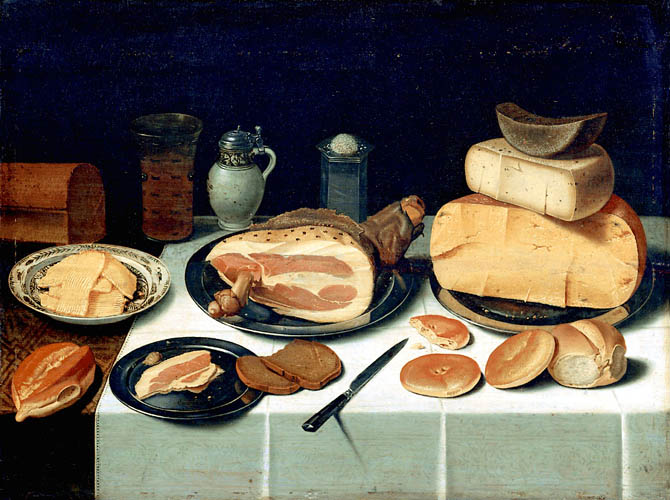
Still life with cheese by Floris van Schooten

When the Dutch East India Company was established in 1602, the impact on global trade was massive -- similar to the internet's impact on trade today. The art world was changed forever.

The emergence of international trade on a broad scale also set the stage for the rise of a merchant class, who used their new income to buy large houses. They covered the walls of their new homes with art, and in so doing unleashed one of the biggest revolutions in art history.

Prior to this time, most artwork had been commissioned by the rich -- that is, by monarchs or churches, and most subject matter was either religious in nature, or served to exalt royal figures and aristocratic ideals.

But in the Golden Age of Dutch painting, still lives and domestic scenes took their place as worthy subjects for art. Painters like Rembrandt and Vermeer created wonderful paintings of apples and pears, home and hearth, feasts and wine and beer.

Today a similar market revolution is underway; one that threatens to turn the art world on its head. Artists and art collectors can now connect directly with each other, no matter where they are in the world.

Personally, I have decided to start a new blog where I'll sell my paintings by eBay auction, starting at 99 cents. The idea is to let the market decide, and let the market for my paintings evolve over time. If you're interested I hope you'll subscribe.

I am also excited to see how the paintings take on a life of their own, and hope collectors will share photos of how they chose to display the artwork in their personal environment.

In this thread, let's discuss the following questions:

1. What do you think is happening?

2. How will it impact you?

3. How can we work together to create a new art, for a new world?

4. What other thoughts do you have?

Keep in touch! Sign up to get updates and occasional emails from me.

03 December 2006

Look Me Up Under "Missing Link" on Wikipedia

Timely article in today's Washington Post:

Look Me Up Under "Missing Link": On Wikipedia, Oblivion Looms for the Non-Notable
.

I wish they had called me for a quote!

Funnily enough, I found the article on the Wikipedia talk pages.

Here's the latest installment of the XPLANE Wikipedia saga.

Keep in touch! Sign up to get updates and occasional emails from me.

How can our spaces improve creativity?

In reply to my post about process, anonymous said:
I truly believe if there were more environments that fostered and encouraged innovative and creative thinking...we'd be a different place.

For once I'd like someone to walk up and say "let's reinvent the wheel just for fun." I know these people exist everywhere, I think they just need a little push.

Maybe that's a deeper conversation for another place...sorry for the rambling.
I agree, it's a deeper conversation. So let's have it.

How can we create work environments that encourage innovation and creative thinking? I look forward to hearing your thoughts here.

Keep in touch! Sign up to get updates and occasional emails from me.

02 December 2006

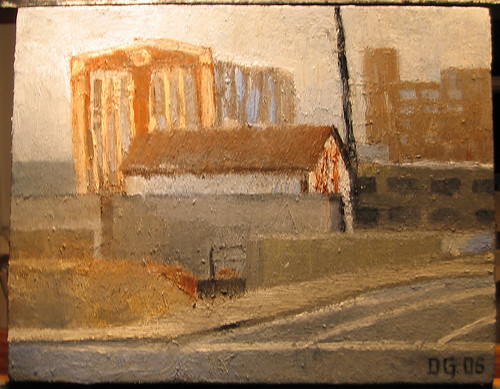
Cityscape for sale on eBay


Cityscape for sale on eBay, originally uploaded by dgray_xplane.

Ok, here goes. My first original painting for sale on eBay.

It's a cityscape, a view of downtown St. Louis from the south.

I am going to let the market decide what it's worth: bidding starts at 99 cents (plus $10 shipping, if you're in the US).

You can bid on it here.

Bidding ends Saturday December 9th.

Keep in touch! Sign up to get updates and occasional emails from me.