01 November 2005

What is a follow trail?

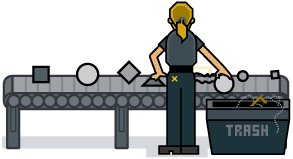
A follow trail is a simple question that you can keep asking till you get to the root of something. Just continue to ask the question till you get to the source. You'll be surprised how powerful this one is. Follow trails are typically based on one-word questions, like:
- And?/and?
- Why?/why?
- How?/how?

[Note: There wasn't actually a term for this, but it was an important concept so I made it up :)]

Keep in touch! Sign up to get updates and occasional emails from me.
The productivity equation

What is productivity?

Personal growth expert Steve Pavlina has a great definition:

Productivity = Value/Time (productivity equals value created divided by time spent)

Steve points out that you can increase your productivity in two ways:
1) Increase the value created
2) Decrease the time required to create that value

You can decrease the time requirement by getting more efficient, but eventually you will hit a point of diminishing returns, where getting more efficient won't be worth the effort. However, there is no ceiling to the amount of value you can create, so Steve suggests (and I agree) that value is a better place to focus.

What is value?
Steve says you need to define it for yourself, but he has an equation for this also:

Value = Impact x Endurance x Essence x Volume

Impact: Who gets the value? How much do they get? Is there a ripple or network effect, where others see value as well?

Endurance: How long does it last? Is it quickly forgotten or does it regenerate?

Essence: How important is it to the people who get it? How do ethy value it? Would they pay for it? Could they imagine living without it? Could they care less?

Volume: How much of it can you create? Does it scale?

So putting productivity and value together you get

Productivity = (Impact x Endurance x Essence x Volume)/Time

Steve follows this by making an interesting point:
"... most of the productivity literature focuses almost exclusively on volume and time. But those are the most limiting parts of this equation. However, they’re also the easiest to write about."

Read more in Steve's post: What is productivity?

Keep in touch! Sign up to get updates and occasional emails from me.

31 October 2005

Visual thinking practice: Expressing emotion

Visual thinking is the practice of using pictures (the viewing of pictures and the making of pictures) to enhance your ability to solve problems, think about complex issues and communicate effectively.

Are you ready to work on your visual thinking skills? You don't have to be an artist. Pick up a pen or pencil and try the following exercise.

The face is the most instantaneous and recognizable way human beings communicate their emotional state. Drawing facial expressions can help you understand them better, and also will enhance your observation and visual communication skills. Here's how to do it:

First, write the word "Faces" at the top of the page.

Next, divide a piece of paper into twelve squares by drawing two vertical lines and four horizontal lines to form a grid, like the one shown here (For Moleskine users with the small lined notebook, each square should be five lines high).

Now, in each square, draw a circle and make a simple facial expression that communicates an emotion. The goal is to draw twelve facial expressions that are distinct and recognizable.

Want to see how you did? On a separate piece of paper, write down the emotion you were trying to represent with each face. Now show your drawings to a friend and see how many they can guess.

Hints:
1) Feel it. Make the face and try to "feel" the emotion as you draw.
2) Reduce your options. Think about how you might type an emoticon to express the feeling.

Email your drawings to me at dgray[at]xplane[dot]com. I'll post some of your drawings on the Visual Thinking Art blog.

Keep in touch! Sign up to get updates and occasional emails from me.

52% of workers plan to quit within two years

According to a Communication Nation survey, chances are better than 50/50 that any employee will leave your company within the next two years.

We surveyed the readers of Communication Nation about the effectiveness of communication in their workplaces. Who are these readers? Hard to say, but according to a blogads survey,

75% of blog readers make more than $45,000 a year,
54% of their news consumption is online,
21% are themselves bloggers,
46% describe themselves as opinion makers,
79% are male, and
the most common job title given is Computer Professional.

In addition, the respondents to the Communication Nation survey are pretty hard workers (or at least they say they are). Sixty-eight percent either always or almost always meet their deadlines, and follow through on commitments.

So what did we learn?

Let's start with the good news:

People know what their job is. Seventy-one percent say that they clearly understand what their job is and what is expected of them.

They know where to go for help when they need it. Seventy-one percent say they know where to go if they need help or resources to do their jobs.

And now the bad:

Half of workers don't have performance metrics. It's a pretty even split between those who have performance goals that can be objectively measured (50%) and those who don't (49%). That means they don't have an objective way to know how well they are doing in their jobs.

A surprising number of people don't think their boss is in the loop. Sixty percent feel that their boss knows what's going on in their department, which sounds great until you realize that 40% feel otherwise. "Knowing what's going on" would seem to be a pretty low bar for a boss.

Most people don't know what their boss's job is. Sixty-five percent say they don't know how their boss's performance is measured or what the expectations are for their department or group. To me this is significant. If they don't know what's expected of you, how can they help?

Many don't know where they fit in the scheme of things. More that half (55%) say they can see a clear connection between their performance criteria and the company's overall mission and goals. But I can't help wondering what the other 45% see.

They don't have much to look foward to. Sixty-five percent don't know how they will be rewarded if they meet or beat their performance goals (That tells me that it's possible they may not be rewarded at all), and only 28% can see a clear career path at their company.

They're going to leave you. More than half (52%) do not plan to be working in their current job to years from now.

Ouch.

So where does your workplace fall in this spectrum? And if you're a boss, what are you going to do about it? Here are a few ideas to get you started:

Figure out what's important and start measuring it. It's the only way to measure progress. If you're not measuring anything, how do you know if you're getting better or worse?

Tell your team what your job is, and how it's measured. Ask them for their help in meeting your goals.

Give people something to look forward to. Plan to reward people for helping you meet your goals, and most importantly, tell what they must do to be rewarded. It doesn't always have to be financial. It can be a party, a day off, or you can promise to shave your head.

Plan to retain people in the long term. Work with your performers to design a career path that will keep them engaged for the forseeable future.

Talk to them. Let them know that what they think and feel is important to you. Ask good questions, listen, and keep your promises. Most problems can be solved with an open dialogue and a little creativity.

D-kriptik makes some excellent points in a link to this post:

"I have found these four beliefs can help to engender highly successful team members:

1. Be as transparent as possible (e.g., when people ask how the division is doing on meeting its goals, tell them, with metrics, and discuss)

2. Always (and visibly) put in the necessary (and often long) hours to efficiently and effectively produce high quality work that employees can refer to and customers praise (i.e., do as I do),

3. Mentor others, and build and encourage other mentors, in what it takes for 2. (e.g., answering questions, performing tutorials, and brainstorming), and

4. Build a genuine sense of pride in the work, customer satisfaction, and the resulting success (e.g., receiving a call or email from a customer that not just thanks you, but sings your praise, and being recognized by your peers and your bosses for it)."

Let me know how it goes -- and, as always, please post your comments and thoughts.

Keep in touch! Sign up to get updates and occasional emails from me.
30 October 2005

The Art of War, blogging and threaded discussion

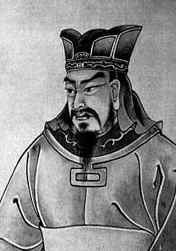
The Art of War by Sun Tzu ranks among my favorite books of all time. It's quite simple and easy to read, yet every time I read it I learn something new. Over the years I have come back to it many times and it always feels fresh.

If you read many of the Chinese classics you will note a theme of commentary, or collaborative dialogue that is similar to blogging or threaded discussion. A classical text does not stand alone. Over the centuries, great minds add their thoughts and annotations to create a deep, rich, textured manuscript.

A new translation of Sun Tzu captures the essence of the original and blends it with the modern age, by adding collaboration and threaded discussion to the mix: visit Shonshi.

Keep in touch! Sign up to get updates and occasional emails from me.
The world according to Einstein

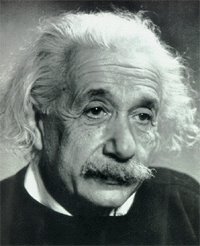
From An Essay by Einstein -- The World As I See It:

'The most beautiful experience we can have is the mysterious. It is the fundamental emotion that stands at the cradle of true art and true science. Whoever does not know it and can no longer wonder, no longer marvel, is as good as dead, and his eyes are dimmed.

It was the experience of mystery -- even if mixed with fear -- that engendered religion. A knowledge of the existence of something we cannot penetrate, our perceptions of the profoundest reason and the most radiant beauty, which only in their most primitive forms are accessible to our minds: it is this knowledge and this emotion that constitute true religiosity.

In this sense, and only this sense, I am a deeply religious man... I am satisfied with the mystery of life's eternity and with a knowledge, a sense, of the marvelous structure of existence -- as well as the humble attempt to understand even a tiny portion of the Reason that manifests itself in nature."

Keep in touch! Sign up to get updates and occasional emails from me.

Sunday afternoon in the park

It's a beautiful day here in St. Louis. But if it's raining where you are or you can't get out, visit Vector Park for an enjoyable journey of the mind.

Vector Park is the brainchild of Patrick Smith. Enjoy!

If you like Vector Park you might also like this.

Keep in touch! Sign up to get updates and occasional emails from me.

How to make better presentations with story templates and storyboards

If you use PowerPoint, check out a couple of free online courses:

Story Template 101
Learn how to define and refine your story using a Story Template. We'll explore in-depth how story structure works, and how to work with each one of three Acts. [Click here to view the archived recording (Windows Media file)]

The PowerPoint Storyboard 101
Once you have a PowerPoint storyboard, how do you illustrate it? We'll cover a range of design techniques to create compositions that are easy to assemble, look at types of graphics that are appropriate to each Act, and explore a range of sources for graphical materials. [Click here to view the archived recording (Windows Media file).]

From my friend Cliff Atkinson at Sociable media: PowerPoint solutions.

Keep in touch! Sign up to get updates and occasional emails from me.

The Dale Carnegie cheat sheet

Here is Dale Carnegie's summary of his book, How to Win Friends and Influence People, written in 1936. In it you will find:

Fundamental techniques in handling people

Six ways to make people like you

How to win people to your way of thinking

Be a leader: how to change people without giving offense or arousing resentment

You will also find a great summary of the book, by Daniel Schutzsmith, here.

Keep in touch! Sign up to get updates and occasional emails from me.

29 October 2005

Games for geeks

Do any of these statements ring true?

You're a geek and don't want the great line of geekiness to end with you; you need to pass it on to your kids.

You want to learn the basics of programming and don't know how to get started.

You're having a geek party and don't want to play Dungeons and Dragons or Magic: The Gathering.

You want to get into this whole Geek Chic thing.

If any of these apply to you, here's a great way to get started: c-jump, the board game that teaches programming basics.

If you like this one, here's another: the geekiest board game ever (shared by B Pipa).

Thanks Samantha!

Keep in touch! Sign up to get updates and occasional emails from me.

Beware of experts, wizards and consultants

When you don't know something, sometimes the first instinct is to ask an expert.

But I think that's a mistake: experts, wizards and consultants are fickle friends. Experts usually mean well, but they often don't dwell in the world of reality. Have you ever noticed that the more expert people are in a subject, the more they tend to get into arguments?

Expert analysis and research have their place; theories help us see larger patterns and turn observations and perceptions into meaning.

But never underestimate the power of your own common sense.

Keep in touch! Sign up to get updates and occasional emails from me.

28 October 2005

The system dynamics of technology

Kevin Kelly is one of the original founders of Wired magazine and a true iconoclast:

"I fully embrace the transforming power of technology.

Yet our family of five still doesn't have TV. I don't have a pager, or PDA, or cam-phone. I don't travel with a laptop, and I am often the last in my 'hood to get the latest must-have gadget. I find a spiritual strength in keeping technology at arm's length.

At the same time I run a daily website called Cool Tools where I review a broad range of highly selected consumer technology. A river of ingenious artifacts flows through my studio; a fair number never leave. Despite my detachment, I continue to deliberately position myself to keep technological options within reach."

This paradoxical relationship to technology is the subject of his next book. You can preview some of the thinking at The Technium:

"I'm calling this site The Technium. It's a word I've reluctantly coined to designate the greater sphere of technology - one that goes beyond hardware to include culture, law, social institutions, and intellectual creations of all types. In short, the Technium is anything that springs from the human mind. It includes hard technology, but much else of human creation as well. I see this extended face of technology as a whole system with its own dynamics.

On this site I aim to investigate the Technium. What does it want? Why do we embrace it? Is it possible to reject it? How does it relate to God, if at all? What kind of control do we really have on the pace and future path of the Technium itself?"

Keep in touch! Sign up to get updates and occasional emails from me.

27 October 2005

Think small

When it comes to new ventures, sometimes it pays to think small. The long tail and other niche market approaches are all examples of thinking small. But you can think small in other ways:

- Small dollar investment. Find a way to put a little money into it and see what happens.
- Small time investment. Invest a little time in a lot of places.

Small investments allow you to diversify your enegy and let Darwinian economics take their course. When the fittest ideas survive, you can then invest more time and money in the things that show promise.

The idea is that, rather than doing exhaustive analysis and testing beforehand, plant a lot of seeds and see what begins to grow. Then you can focus your attention on nurturing those things.

XPLANE started as a part-time hobby. Many great things start that way. You don't always need a business plan.

Think small.

Keep in touch! Sign up to get updates and occasional emails from me.

26 October 2005

Al Pacino and the Digg effect

At 7:30 am US Central time, on Saturday, October 2nd, Albert Pacino of the Netherlands submitted a link from Communication Nation to Digg.com. That is, he dugg it. With that click Albert started a linking cascade that caused a 20x increase in traffic to this blog and taught me a lesson in the economics of social bookmarking and the Digg Effect.

(If you're wondering what Digg is, you can read more about it on their home page.)

Here's what happened:

A post called "How easy is your writing to understand" was originally published by Communication Nation on September 19, 2005.

To set a baseline, this is a new blog and averages about 200 visits a day.

At approximately 7:30 am on Saturday, October 22, 2005 -- more than a month after the original post -- Albert Pacino diggs the post. Within hours Communication Nation was on the front page of Digg.com. By 6pm the post made the del.icio.us/popular list. At the end of the day Communication Nation had received more than 4,500 visitors; that's about 20 times more than the previous day.

By Sunday, the pace was slowing. The post was submitted to reddit's what's new page by spez. By Monday the site was no longer showing up on del.icio.us or reddit, but readers from digg were still trickling in. As you can see from the Sitemeter chart shown here, things are pretty much back to normal.

Click here for the XPLANATiON.

Now I'm suffering from Post-Digg Syndrome: Could this have happened during the week when traffic is higher or was it a fluke, a weekend effect? What could I have done to keep the traffic up? I have no idea.

I have since learned that the Digg Effect is not perceived positively by everyone. Those who pay for their own hosting, or that host their own servers, can be brought to their knees by the overwhelming traffic surge. In this case you can chalk one up to the power of the massive Google/Blogger server farms, because Communication Nation felt no pain.

I have also learned that Albert Pacino is a controversial character. He's suspected of foul play because his diggs get quickly dugg by a dozen others. His critics say he's created fictional names so he can digg things multiple times. His champions say he gets dugg so much because he's a surfing machine and he finds great links. But as far as I'm concerned it doesn't matter: either way he's a hero, for bringing Communication Nation to the masses :-)

Keep in touch! Sign up to get updates and occasional emails from me.
Charting a course for the soul

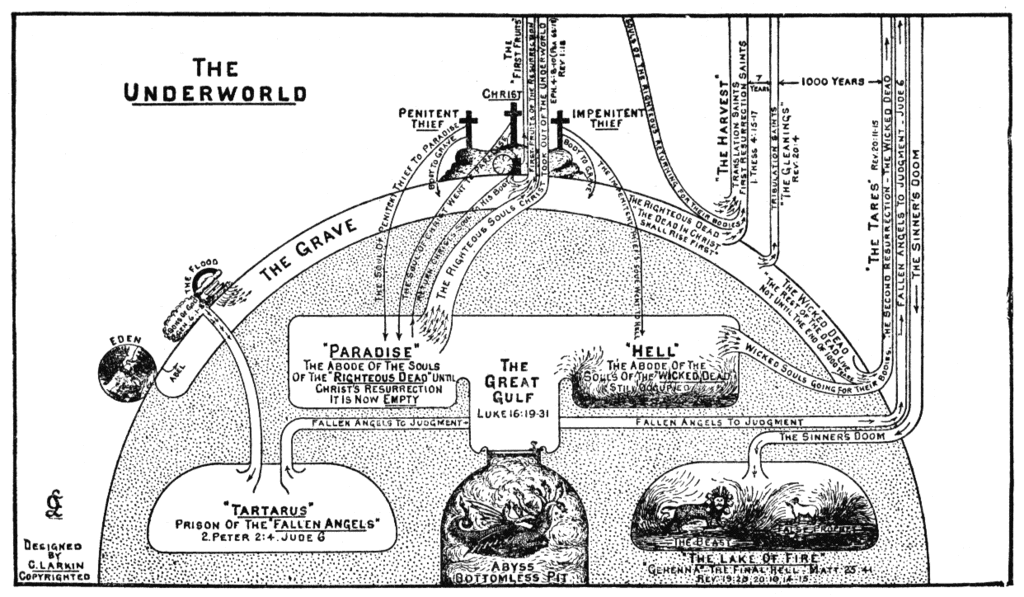
Clarence Larkin's charts are fascinating examples of information design. Charles Larkin was a preacher who spent three years of his life visualizing his understanding of biblical themes.

No one would dispute that the Christian bible is exceedingly complex, and famously subject to interpretation.

But Clarence Larkin's visualizations -- whether you agree or disagree with their contents -- are a joy to explore.

Larkin was a mechanical engineer, professional draftsman, teacher and manufacturer, and all of those disciplines shine through in the intricate detail, logic and aesthetics by which the images are constructed.

As the founder of a company that strives to convey more than just the facts -- to go beyond data to convey rich context and true meaning, it's not hard to recognize an artist at work.

Keep in touch! Sign up to get updates and occasional emails from me.